Moving abroad with your dog can be exciting, but it also requires careful planning. International pet travel involves documentation, veterinary requirements, airline regulations, and proper travel preparation. A well-prepared journey helps ensure your pet remains safe, comfortable, and stress-free throughout the relocation process.
1. Start Planning Early
Most countries have specific import requirements for pets. Some destinations require vaccinations, microchipping, blood tests, import permits, or quarantine arrangements that may take weeks or even months to complete.
Starting early gives you enough time to gather documents, schedule veterinary appointments, and avoid last-minute complications.
2. Schedule a Veterinary Check-Up
Before travel, arrange a complete health examination for your dog. Your veterinarian can:
- Verify your dog’s fitness for travel
- Update required vaccinations
- Review destination-specific requirements
- Provide health certificates if needed
- Discuss any medical concerns related to air travel
A healthy pet is far more likely to experience a smooth journey.
3. Ensure Your Dog Is Properly Microchipped
Many countries require pets to be identified with an ISO-compliant microchip before travel. The microchip serves as a permanent identification method and is often linked to vaccination and import documentation.
Always confirm that the microchip details match all travel records.
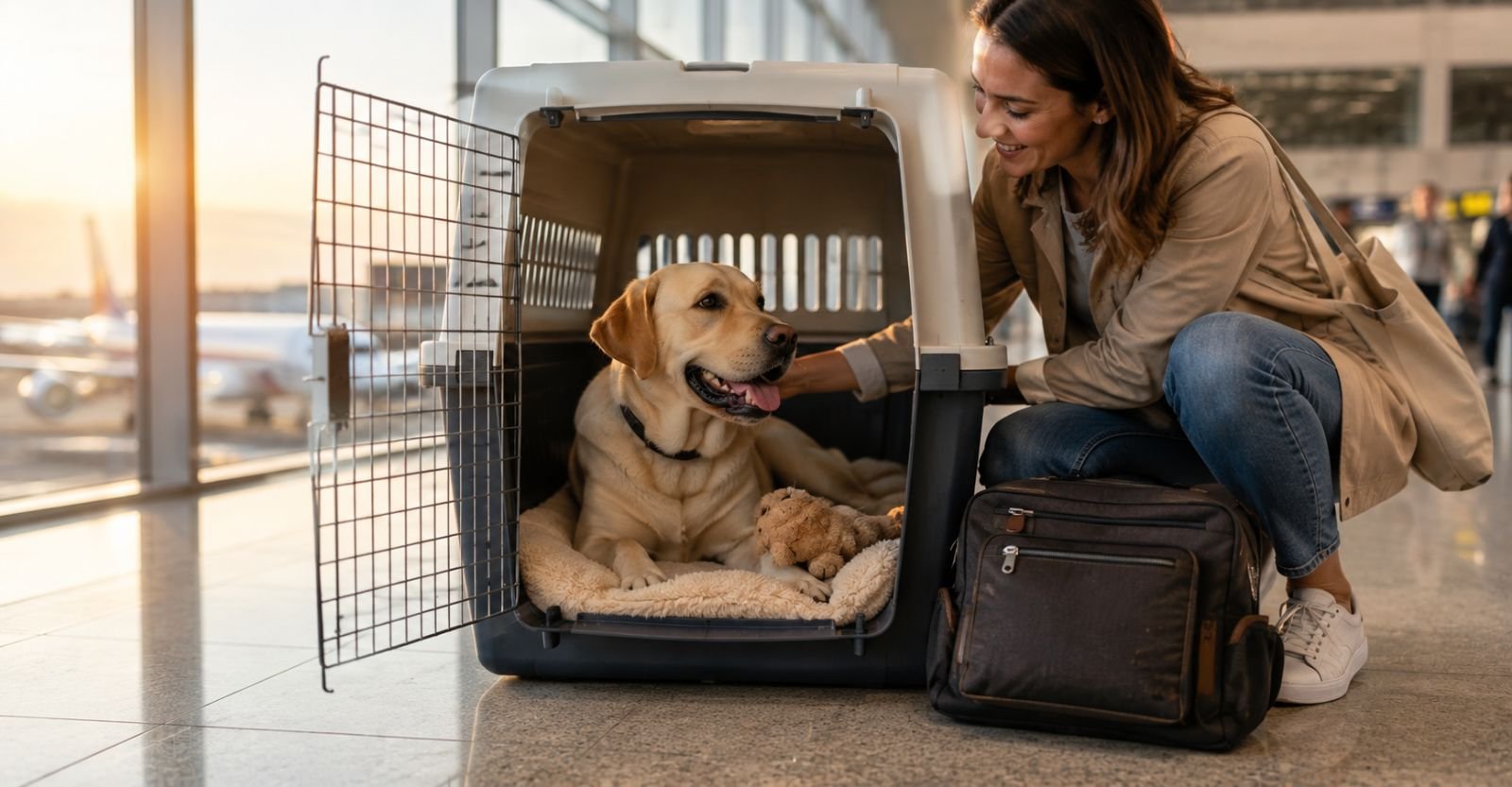
4. Choose the Right Travel Crate
An airline-approved travel crate is one of the most important elements of pet relocation.
Your dog should be able to:
- Stand comfortably
- Turn around easily
- Lie down naturally
- Access water during travel
Introducing the crate several weeks before departure helps your dog become familiar with the space and reduces travel anxiety.
5. Prepare Travel Documents Carefully
Documentation requirements vary by destination but commonly include:
- Vaccination records
- Microchip information
- Veterinary health certificates
- Import permits
- Airline booking confirmations
Keeping digital and printed copies of all documents can prevent delays during check-in and customs procedures.
6. Maintain Your Dog’s Routine
Pets feel most comfortable when familiar routines are maintained.
In the weeks leading up to travel:
- Keep feeding schedules consistent
- Continue daily exercise
- Maintain regular sleep patterns
- Spend quality time together
A calm and confident pet typically adapts better to travel.
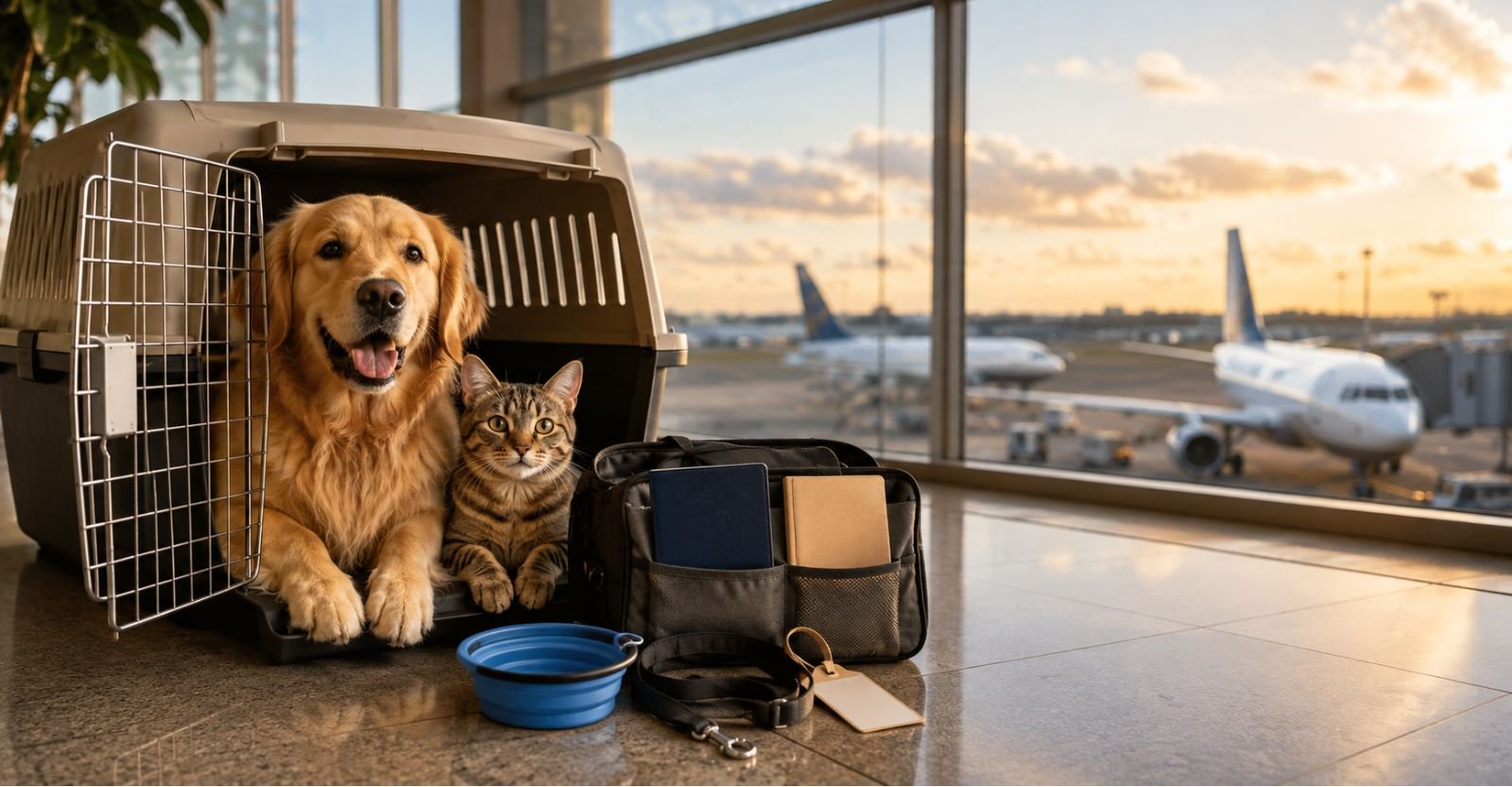
7. Pack a Pet Travel Kit
Your travel kit should include:
- Food and treats
- Water bowl
- Leash and collar
- Cleaning supplies
- Medical records
- Favorite toy or blanket
Familiar scents can provide reassurance during a long journey.
8. Avoid Last-Minute Changes
Avoid introducing new foods, medications, or routines immediately before departure unless advised by your veterinarian. Consistency helps reduce stress and digestive issues.
Final Thoughts
International pet relocation requires preparation, but with proper planning, your dog can travel safely and comfortably. Understanding airline requirements, maintaining accurate documentation, and preparing your pet well in advance can make the entire process significantly smoother.
At PetFly, we assist pet parents through every stage of international pet relocation, helping ensure a safe and stress-free journey for beloved companions worldwide.