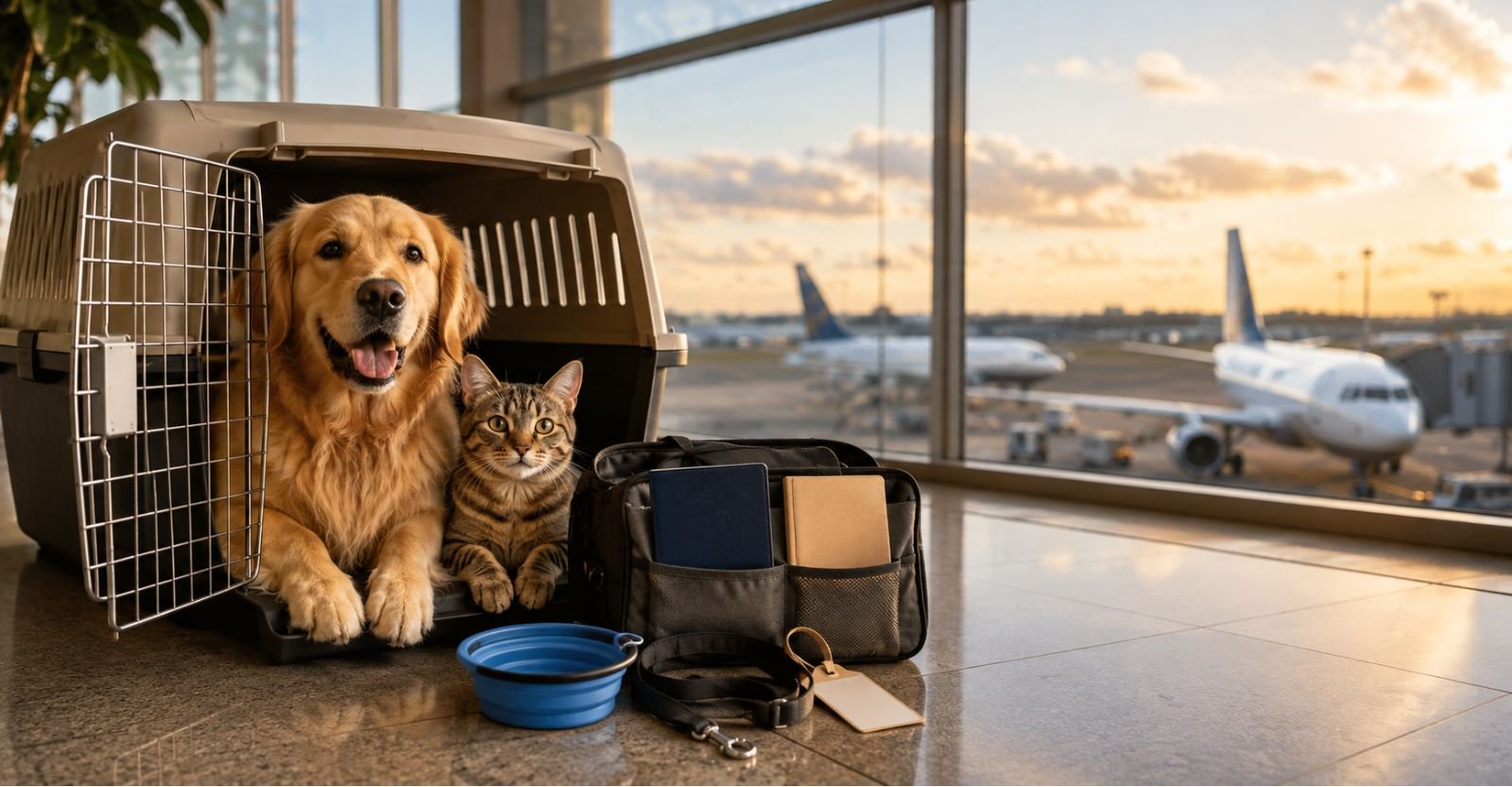
For many pet owners, the thought of flying with a dog or cat can be stressful. The good news is that most pets travel safely and successfully when they are properly prepared. The key is understanding how pets experience travel and taking steps to make the journey as comfortable as possible.
At PetFly, we’ve helped thousands of pets relocate domestically and internationally, and we know that preparation makes a significant difference.
Why Pets Become Anxious During Travel
Air travel introduces several unfamiliar experiences for animals, including:
- New environments
- Different sounds and smells
- Time spent in a travel crate
- Separation from their owners
- Changes in routine
These factors can cause temporary stress, especially for pets that have never traveled before.
Crate Training Is the Most Important Step
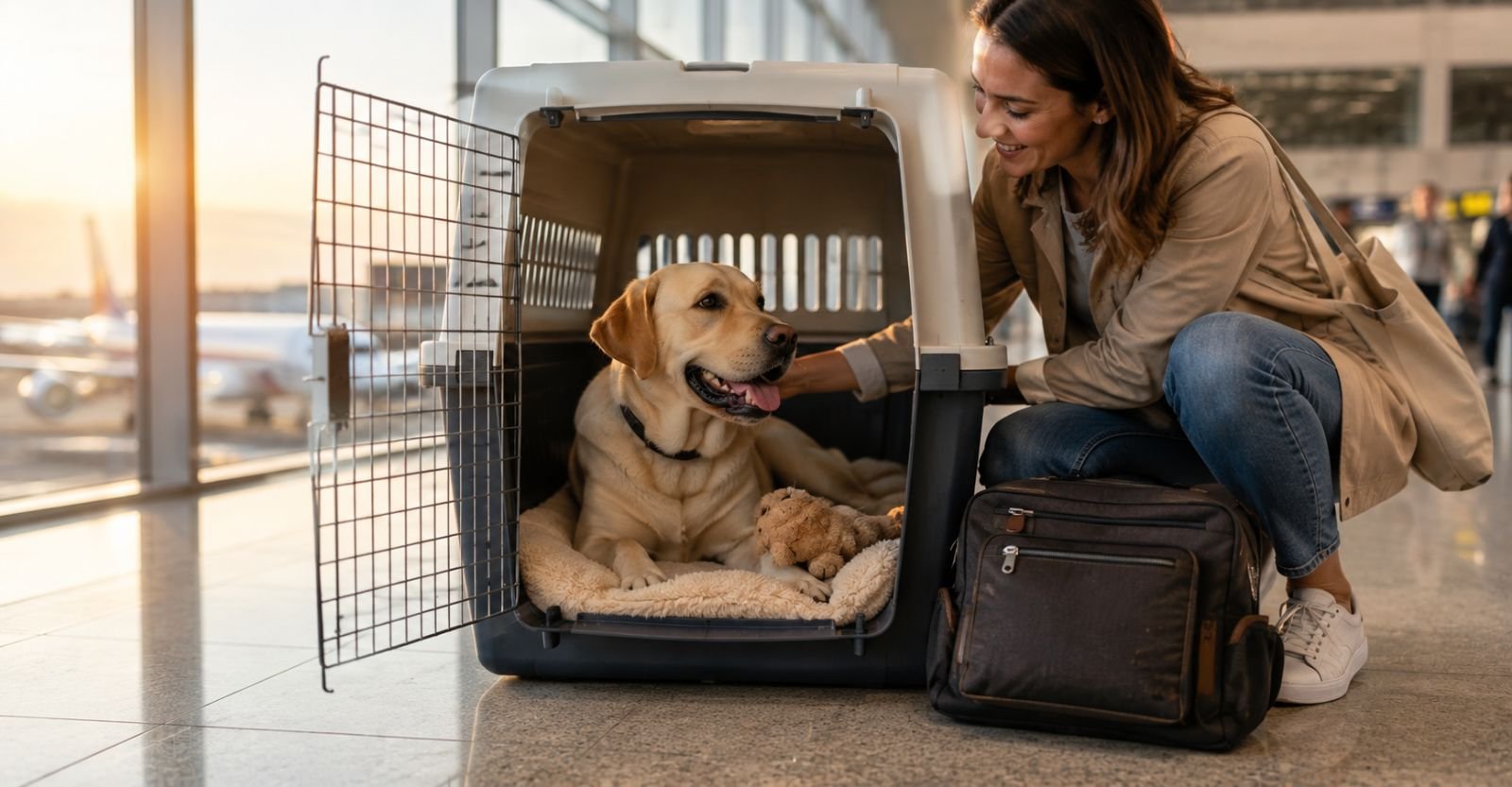
A travel crate should feel like a safe space, not a surprise on departure day.
Begin crate training 3–4 weeks before travel by:
- Leaving the crate open at home
- Placing treats and toys inside
- Feeding meals near or inside the crate
- Gradually increasing the time your pet spends inside
Pets that are familiar with their crate typically travel with much less anxiety.
Keep Your Routine Consistent
Animals find comfort in routine. In the days before travel:
- Feed meals at the usual times
- Maintain regular exercise
- Avoid major schedule changes
- Keep bedtime and waking times consistent
A familiar routine helps your pet feel more secure despite the upcoming trip.
Exercise Before Departure
For dogs, a long walk or play session before heading to the airport can help burn excess energy and encourage relaxation during travel.
Cats benefit from gentle play sessions and a calm environment before departure.
Avoid Last-Minute Feeding
Most veterinarians recommend avoiding a large meal immediately before air travel. A light meal several hours before departure is usually more comfortable for your pet.
Always provide access to water, and follow your veterinarian’s specific recommendations.
Use Familiar Items
Place familiar items in the crate, such as:
- A blanket with your scent
- A favorite small toy
- Familiar bedding
- An unwashed T-shirt from home
These familiar scents can provide reassurance during the journey.
Skip Sedation Unless Directed by Your Veterinarian
Many airlines discourage routine sedation because it can affect a pet’s balance, breathing, and temperature regulation during flight.
If your pet has severe travel anxiety, discuss options with your veterinarian well before travel day.
Stay Calm Yourself
Pets are remarkably sensitive to their owners’ emotions. Remaining calm and confident during check-in and drop-off can help your pet feel more secure.
Avoid prolonged emotional goodbyes, which can sometimes increase anxiety rather than reduce it.
Work With Experienced Pet Travel Professionals
Coordinating flights, paperwork, check-in procedures, and arrival logistics can be overwhelming for pet owners. Professional pet relocation services help ensure that your pet’s journey is carefully planned and monitored from departure to arrival.
A Smooth Journey Starts With Preparation
Air travel doesn’t have to be frightening for your pet. With crate training, proper scheduling, veterinary preparation, and expert planning, most pets adapt surprisingly well to travel.
At PetFly, we treat every pet as if they were our own, providing personalized guidance and relocation support for domestic and international moves.
Need help planning your pet’s flight? Contact PetFly for expert assistance with safe, stress-free pet travel.